Adding guardrails to large language models
About Guardrails
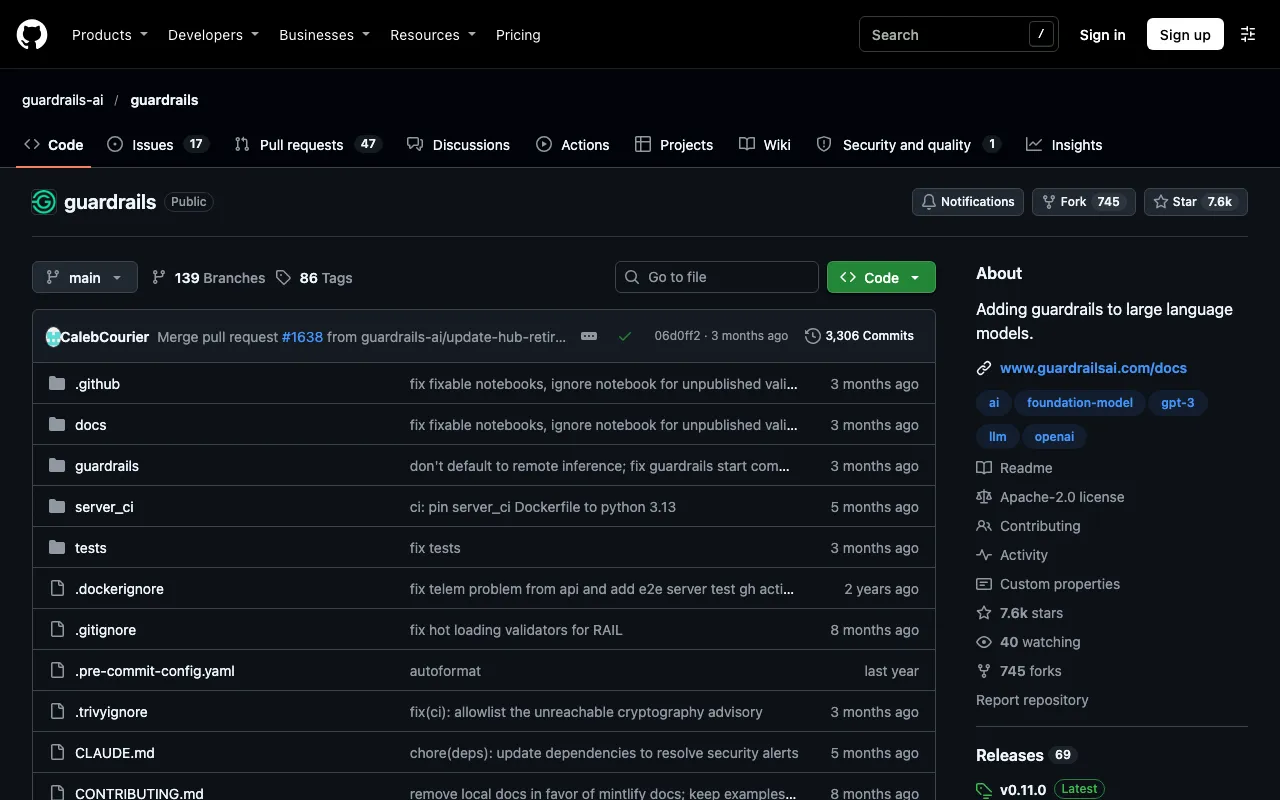
Guardrails AI is an open-source Python framework that checks what goes into and comes out of a language model. You attach validators for things such as toxic language, personal data leaks and bad structure, and it can ask the model again when a check fails.
A Guardrails Hub offers reusable checks for toxicity, personal data, hallucination and bias, and it can enforce structured output. It works with any model, as a library or as a service behind a REST API, with a commercial managed version.
Guardrails AI builds open-source safety and reliability tooling for language model applications, and its co-founder and chief executive is Shreya Rajpal.
Key features
- Validators for toxicity, personal data, hallucination and bias
- Structured-output enforcement
- Re-asks the model when validation fails
- Guardrails Hub of reusable checks
- Library or REST service
- Works with any model
Links
All content and agents from Guardrails
Frequently asked questions about Guardrails
- What is Guardrails?
- Adding guardrails to large language models. It is listed on botshub under agent infrastructure and tools.
- Where is Guardrails from?
- Guardrails comes from United States.
- Is Guardrails free or open source?
- Guardrails is tagged as open source on botshub. Check the official site for current terms.
- What can Guardrails do?
- Key features include validators for toxicity, personal data, hallucination and bias, structured-output enforcement, re-asks the model when validation fails, guardrails Hub of reusable checks and library or REST service.
- What are alternatives to Guardrails?
- Other agent infrastructure and tools on botshub include Browser Use, Stagehand, Playwright MCP and Letta. See all alternatives to Guardrails.