DSPy: The framework for programming—not prompting—language models
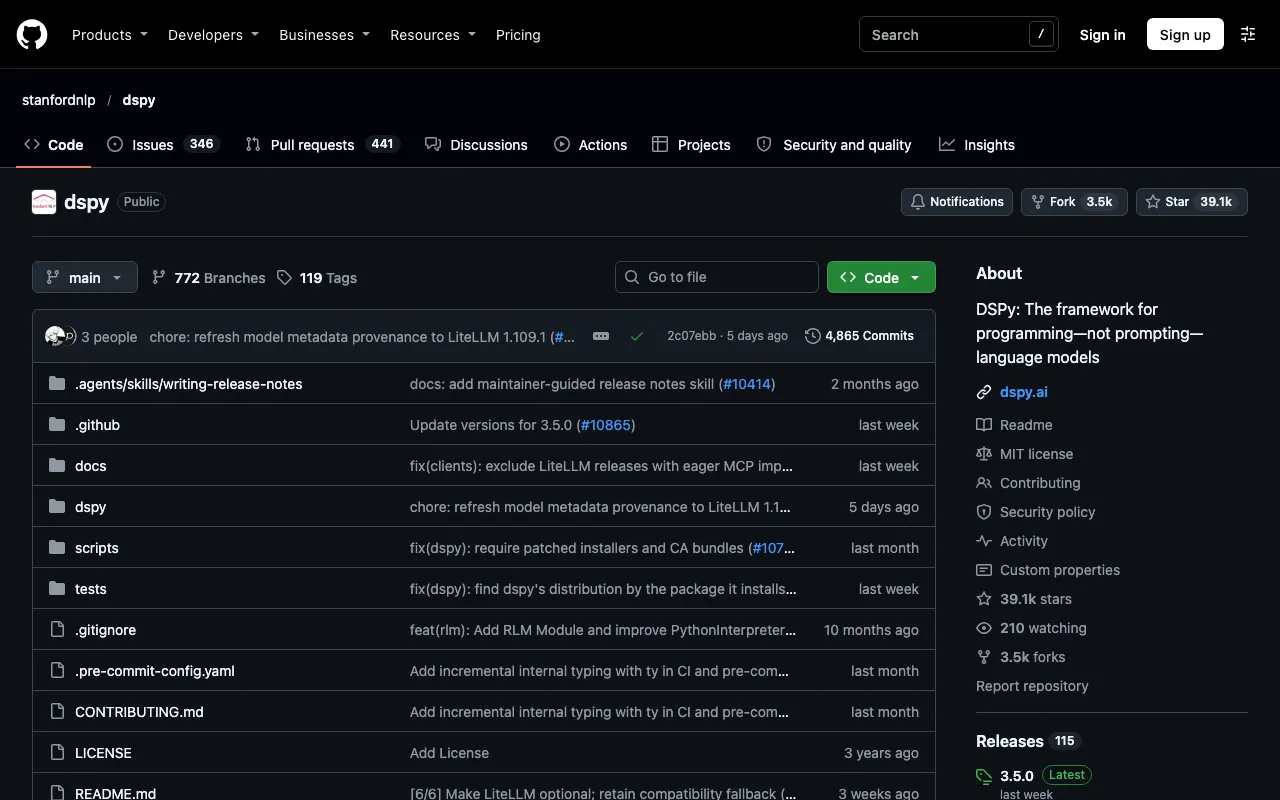
About DSPY
DSPy is a framework from Stanford NLP for programming, rather than prompting, language models. You declare what each step should take in and produce, and DSPy's optimisers tune the prompts and examples against a metric you define.
It offers signatures that declare inputs and outputs, and reusable modules such as chain of thought and ReAct. It is meant to replace hand-written prompt strings that break when a model or pipeline changes.
DSPy is an open-source research project from the Stanford NLP group, led by Omar Khattab.
Key features
- Signatures that declare inputs and outputs
- Reusable modules such as chain of thought and ReAct
- Optimisers that tune prompts against a metric
- Open source from Stanford NLP
Links
All content and agents from Stanford NLP Group
Frequently asked questions about DSPY
- What is DSPY?
- DSPy: The framework for programming—not prompting—language models. It is listed on botshub under agent frameworks and sdks.
- Who makes DSPY?
- DSPY is made by Stanford NLP Group, a company based in United States.
- Is DSPY free or open source?
- DSPY is tagged as open source on botshub. Check the official site for current terms.
- What can DSPY do?
- Key features include signatures that declare inputs and outputs, reusable modules such as chain of thought and ReAct, optimisers that tune prompts against a metric and open source from Stanford NLP.
- What are alternatives to DSPY?
- Other agent frameworks and sdks on botshub include LangGraph.js, AutoGen, Agents and Adala. See all alternatives to DSPY.